

Guias
Como organizar o Assistir mais tarde do YouTube sem apagar tudo
Transforme o Assistir mais tarde do YouTube numa fila pequena: preserve cursos e referências, remova vídeos sem função e evite scripts de exclusão em massa.
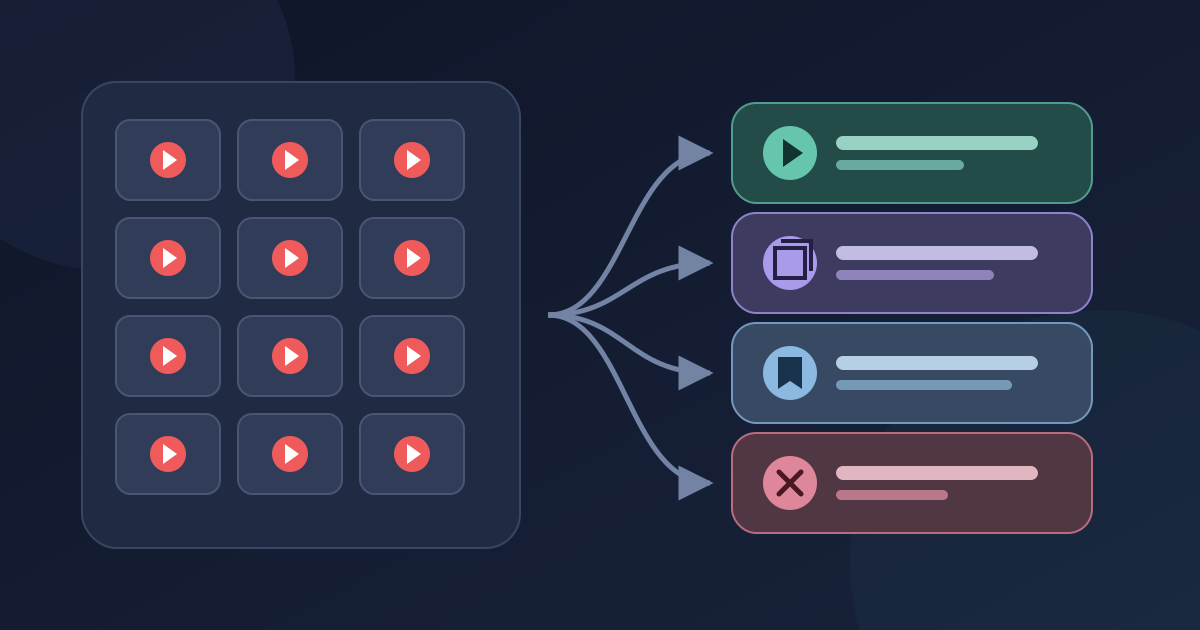
Você não precisa zerar o “Assistir mais tarde” do YouTube para voltar a confiar nele. Dê uma função mais estreita à lista: guardar os vídeos sobre os quais você consegue tomar uma decisão em breve. Cursos vão para playlists próprias, materiais duráveis viram referência e o que perdeu a função pode sair.
Assim, o que ainda importa é preservado sem transformar cada clique antigo em tarefa atrasada.
O tamanho do acúmulo aparece com frequência em conversas públicas. Há quem use a lista todos os dias e há quem mencione milhares de vídeos sem um plano realista para chegar ao fim. Num relato em português, uma pessoa contou que separou uma parte em pastas e descartou o restante; em uma discussão recente em inglês, as rotinas variam bastante. São experiências individuais, não uma pesquisa representativa sobre usuários do YouTube.
Use o Assistir mais tarde como fila temporária
“Talvez eu queira isso algum dia” e “pretendo assistir em seguida” são compromissos diferentes. Quando o Assistir mais tarde tenta atender aos dois, a lista deixa de ajudar a escolher.
Durante a revisão, todo vídeo precisa encontrar uma destas quatro saídas:
| Para que o vídeo serve agora | Decisão |
|---|---|
| Responde a uma pergunta atual e cabe numa sessão plausível | Manter no Assistir mais tarde e nomear essa sessão |
| Faz parte de curso, evento ou sequência | Adicionar a uma playlist específica do YouTube |
| Será procurado ou citado depois, sem intenção de assistir agora | Guardar como referência fora da fila ativa |
| O evento passou, existe uma versão melhor ou não há mais uso | Remover do Assistir mais tarde |
Isso não é uma busca por “caixa de entrada zero”. Uma fila útil pode ter vídeos ainda não assistidos. O importante é saber por que cada um continua ali.
Playlist e biblioteca de referências também resolvem problemas distintos. A playlist preserva a ordem de uma sequência dentro do YouTube. O sistema de referências ajuda a reencontrar uma fonte por projeto, assunto ou anotação. O guia sobre favoritos, lista de leitura e arquivo desenvolve melhor essa separação.
Interrompa novas entradas antes da limpeza
Se novos vídeos chegam durante a revisão, o trabalho não ganha uma borda visível. Pause os novos salvamentos por uma sessão ou por alguns dias. Não é uma renúncia permanente ao botão; é só tempo suficiente para enxergar a fila que já existe.
Abra um grupo que caiba na tela e não prometa revisar todo o histórico. Para cada vídeo, complete uma frase:
Antes de [momento ou evento], vou assistir a isto para responder ou decidir [pergunta].
“Ver o passo a passo da migração do banco antes da revisão de deploy de sexta” justifica um lugar na fila. “Vídeo interessante sobre backend” ainda não descreve uma decisão. Talvez seja referência, parte de uma playlist do projeto ou apenas algo que não precisa continuar salvo.
Não existe um tamanho correto para a rodada. Escolha um conjunto cujo fim esteja visível e cujas decisões você consiga concluir. Seis vídeos podem bastar na primeira vez; em outro dispositivo, uma tela inteira pode funcionar melhor.
Se quiser registrar o processo, use esta planilha vazia de revisão. Ela é opcional. Serve apenas para impedir que “talvez” vire a resposta para tudo.
Passe pelas mesmas quatro perguntas
Veja o título e a miniatura e faça as perguntas na ordem. Normalmente, não é preciso assistir ao vídeo inteiro para decidir o destino dele.
1. Que pergunta atual este vídeo responderia?
Quando a resposta for concreta, escolha a primeira sessão útil. Pode ser o vídeo completo, um capítulo relevante ou alguns minutos suficientes para descobrir que a fonte não ajuda. Manter o vídeo no Assistir mais tarde faz sentido enquanto essa sessão continuar plausível.
Se a única justificativa for “parece útil”, passe para a próxima pergunta.
2. Ele faz parte de uma sequência?
Módulo de curso, trilha de evento, série de exercícios ou construção dividida em partes fica mais compreensível na ordem. Coloque o vídeo numa playlist dedicada cujo nome deixe clara a finalidade da sequência.
A Central de Ajuda atual do YouTube explica como salvar um vídeo em uma playlist, inclusive privada quando só você deve vê-la. Primeiro, adicione o vídeo ao destino e confira se ele aparece lá. Depois, remova a entrada do Assistir mais tarde. São duas ações, não uma transferência automática.
3. Vou procurar esta fonte depois, em vez de assisti-la logo?
Alguns vídeos valem por uma explicação, entrevista, demonstração ou fala original que você talvez precise consultar. Eles são referências, embora não sejam compromissos de visualização.
Guarde a URL acessível no sistema de referências que você já usa e acrescente o projeto ou a pergunta que permitirão reencontrá-la. “Arquitetura de autenticação — comparar rotação de tokens” ajuda mais do que uma etiqueta genérica chamada “YouTube”.
Confira o novo destino antes de retirar a entrada original. Vídeo privado ou removido não permanece disponível só porque a URL foi salva; este método organiza o acesso, mas não produz uma cópia offline.
4. O que eu perderia se removesse este vídeo?
Aviso de live encerrada, upload duplicado, tutorial de uma ferramenta abandonada ou título que já não significa nada podem sair. Remover é corrigir uma decisão antiga, não avaliar a qualidade do conteúdo.
O YouTube documenta a ação individual no computador em Você → Assistir mais tarde → Mais → Remover de Assistir mais tarde na página de ajuda da lista. Como os rótulos da interface mudam, vale consultar a ajuda atual em vez de depender de instruções memorizadas.
Se a dúvida continuar, o vídeo não ganha automaticamente um lugar permanente na fila ativa. Mande-o para uma revisão temporária com data ou remova-o. Um “talvez” sem prazo é o caminho mais curto para a lista perder a função de novo.
Testamos os limites com 12 cartões preparados
Montamos um conjunto controlado com 12 cartões fictícios de vídeos salvos, três para cada decisão. Foi um exercício editorial de classificação, não uma limpeza feita numa conta autenticada do YouTube, uma pesquisa com usuários ou uma medição do comportamento mais comum. A distribuição igual foi intencional: obrigou as quatro fronteiras a funcionar.
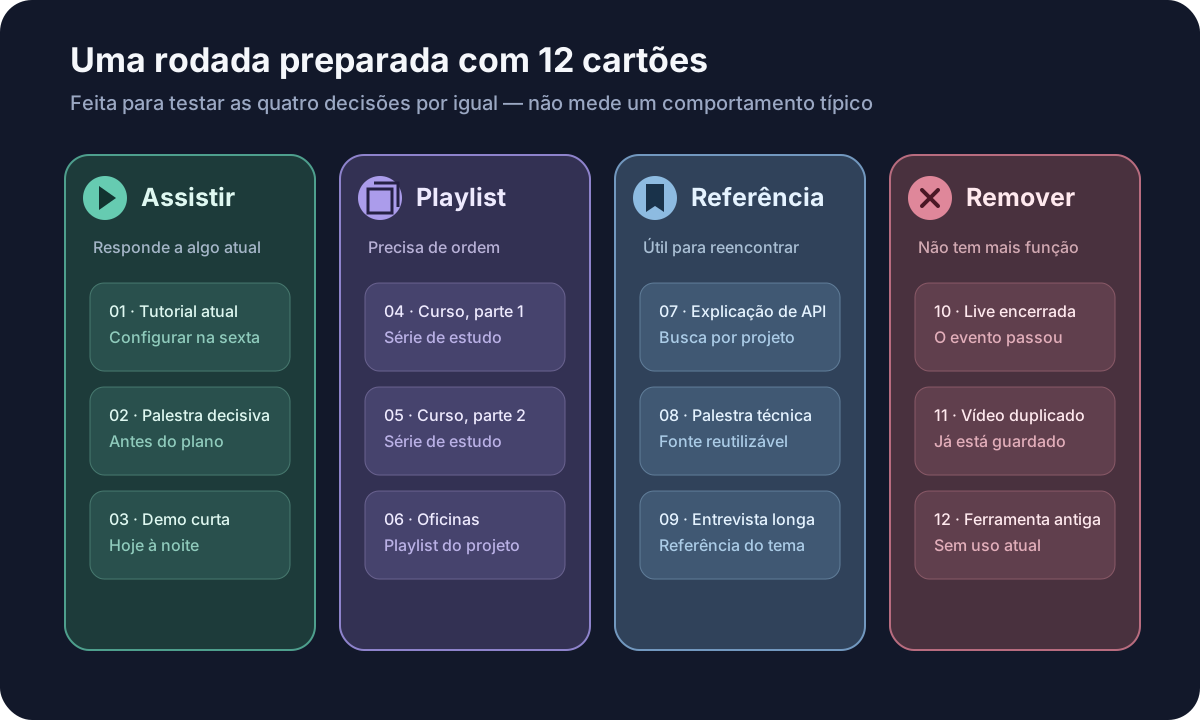
O exercício revelou dois casos em que a decisão costuma escorregar.
Uma entrevista longa com especialista pode parecer candidata óbvia a “assistir”, mesmo sem pergunta atual ou espaço na agenda. Nesse caso, referência é uma descrição mais honesta. Se um projeto criar uma razão para vê-la, ela volta à fila naquele momento.
“É um curso” também não basta para sustentar um compromisso ativo. Um curso abandonado pode continuar bem organizado numa playlist, mas não precisa ocupar o Assistir mais tarde até que o estudo seja retomado. Preservar a sequência e prometer atenção são decisões separadas.
Os cartões deixaram clara ainda a ordem segura: criar ou escolher o destino, adicionar o vídeo, conferir e só então remover a entrada antiga. Fazer o caminho inverso gera um trabalho de recuperação desnecessário.
Evite que a fila volte a crescer do mesmo jeito
A reorganização dura quando cada entrada nova carrega mais contexto do que um título atraente.
Adote uma regra pequena:
Estou salvando isto por causa de [motivo] e vou decidir o que fazer até [momento].
Não é obrigatório escrever a frase sempre. É necessário conseguir formulá-la.
Depois de assistir, dê uma saída ao item. Se respondeu à pergunta, retire-o do Assistir mais tarde. Se virou fonte durável, guarde como referência com contexto suficiente para a busca. Se iniciou uma sequência, deixe a sequência na playlist. Decisões concluídas não precisam ficar misturadas às pendentes.
Evite trocar o acúmulo antigo por um número rígido, como “nunca passar de 20 vídeos”. A capacidade varia com a duração, o trabalho da semana e o tipo de atenção exigido. Uma restrição mais útil é conseguir explicar por que cada item ativo permanece e quando ocorrerá a próxima revisão.
Não entregue a limpeza a um atalho arriscado
Um script ou uma extensão que clica em centenas de itens parece tentador justamente quando a lista ficou impraticável. Também concentra o risco: um seletor desatualizado, uma alteração na interface ou o perfil errado aberto pode afetar muitos vídeos antes que você perceba.
Por isso, este guia fica nos controles individuais documentados. Ele não oferece script de exclusão em massa nem afirma que o YouTube tenha uma migração atômica do Assistir mais tarde para outra playlist. Se o objetivo real for migrar uma conta, fazer backup offline ou preservar vídeos indisponíveis, pare aqui e escolha um processo criado para essa finalidade.
Desconfie de qualquer ferramenta que peça acesso amplo ao YouTube ou aos dados do navegador. Confira permissões, responsável, política de privacidade e forma de remoção antes de instalar. O guia sobre segurança de extensões de favoritos mostra o que avaliar sem tratar a página da loja como prova de segurança.
Há uma exceção documentada para conteúdo marcado como infantil: segundo o YouTube, esses vídeos não podem ser adicionados a playlists nem salvos no Assistir mais tarde. Se uma ação esperada não aparecer, verifique o status do vídeo antes de concluir que o organizador falhou.
As páginas oficiais citadas foram conferidas em 3 de agosto de 2026. O procedimento se apoia nesses controles documentados, não numa captura de uma conta pessoal. Se algum rótulo mudar, siga a ajuda atual e preserve a ordem segura: confirme o novo destino antes de remover a entrada original.
Onde o Nodus Vault entra — e onde não entra
O Nodus Vault pode guardar URLs selecionadas e acessíveis do YouTube ao lado das outras referências da web. Ele não importa nem sincroniza automaticamente a sua lista Assistir mais tarde.
Quando decidir preservar um vídeo, salve a URL pela extensão para Chromium ou cole o link no Nodus. Um item do YouTube pode abrir no painel de visualização de vídeo. Se continuar sendo uma decisão ativa na Lista de leitura, poderá aparecer no Daily Check, que mostra até cinco itens elegíveis por vez. Se servir apenas para consulta, mova-o para Referência; assim, ele deixa de disputar a atenção dessa revisão.
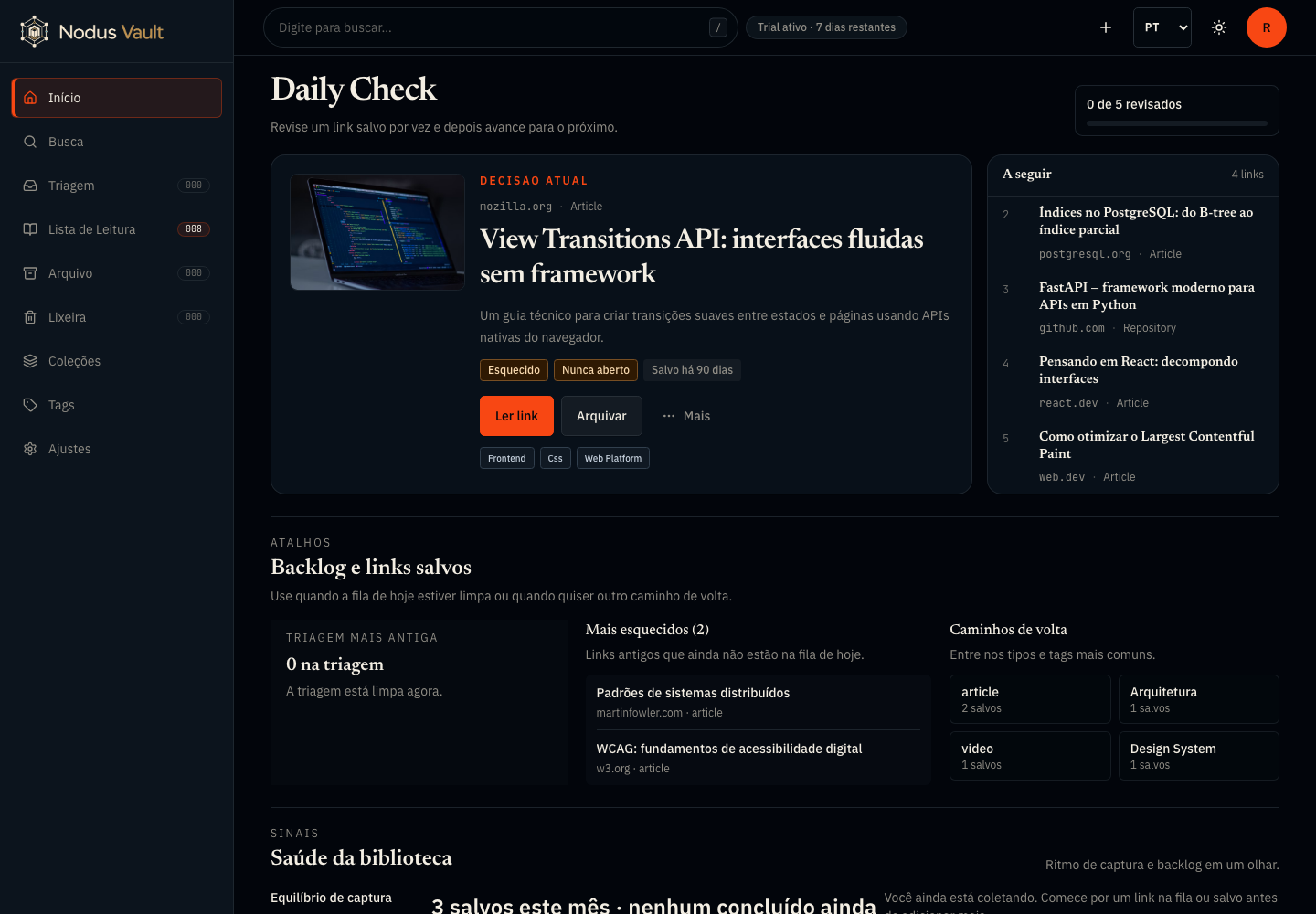
A captura acima é uma demonstração preparada do produto, registrada em 21 de julho de 2026. Ela mostra os estados atuais usados no fluxo; não é prova de que o Nodus consiga acessar uma conta do YouTube ou mover itens do Assistir mais tarde.
Vale deixar esse limite explícito. Você escolhe quais vídeos merecem atravessar a fronteira entre a fila da plataforma e o seu sistema pessoal de referências. O Nodus ajuda com os itens selecionados depois dessa escolha.
Comece com uma única tela
Pause novas entradas, revise um grupo visível e dê uma das quatro saídas a cada vídeo: assistir, playlist, referência ou remover. Confirme cada destino novo antes de apagar a entrada antiga. Então, pare.
O resultado não precisa ser um Assistir mais tarde vazio. Precisa ser uma fila na qual você acredita.
Se um vídeo já tem uma razão durável para ser guardado, salve essa URL selecionada no Nodus Vault junto com o motivo. O restante pode esperar pela próxima rodada curta.